Steer Wrestling
The Rodeo
Sponsored By

Steer Wrestling
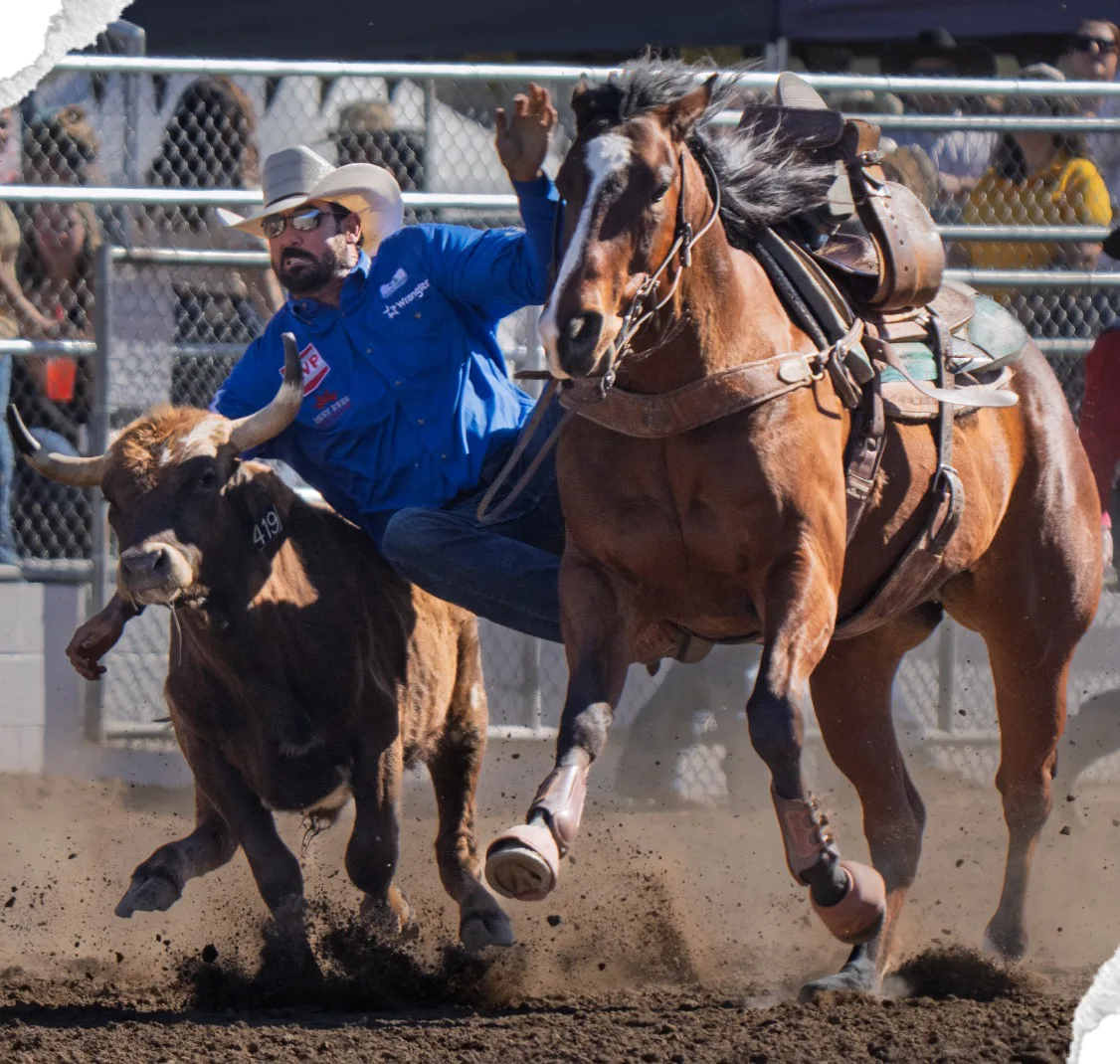
Steer wrestling is one of rodeo’s fastest and most physical events—earning it the nickname “the big man’s event.”
This race against the clock combines horsemanship, timing, technique, and raw strength. In just a few seconds, a cowboy races alongside a running steer, leaves his horse at full speed, takes hold of the steer’s horns, and uses leverage and momentum to bring it to the ground.
But look a little closer and you’ll see that steer wrestling isn’t really an individual event at all. Every run relies on two cowboys, two horses, and an enormous amount of trust.
What Is a Hazer?
More often than not, a hazer is another steer wrestler. These cowboys compete against each other for prize money, championship points, and standings—and then turn around and help one another compete.
Throughout the rodeo season, steer wrestlers haze for each other, travel together, share knowledge, and sometimes even compete aboard the same proven horses.
For those few seconds in the arena, a bulldogger has to completely trust the cowboy riding on the opposite side of the steer. The hazer has to understand the line, read the animal, and know exactly where his fellow competitor needs to be.
Then, a few runs later, their roles may be reversed.
It’s one of the things that makes professional rodeo unique: fierce competition and genuine community exist side by side. In fact, you’ll often see the bulldoggers and their hanging out and grabbing a beer together as soon as their event is done.
How Steer Wrestling Works
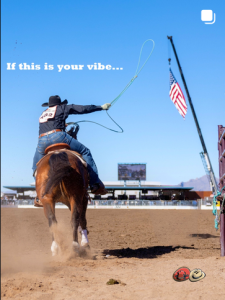
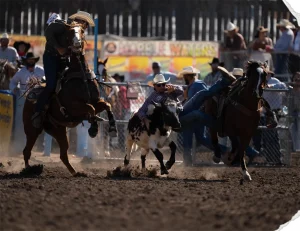
Every run begins with the steer in the chute and two mounted cowboys waiting on either side: the steer wrestler, also known as the bulldogger, and the hazer.
The steer is given a designated head start. Once that advantage is established, the barrier releases and the chase begins. The steer wrestler rides on one side of the steer while the hazer rides on the other, helping keep the animal running straight and in the best possible position.
Then the bulldogger makes his move.
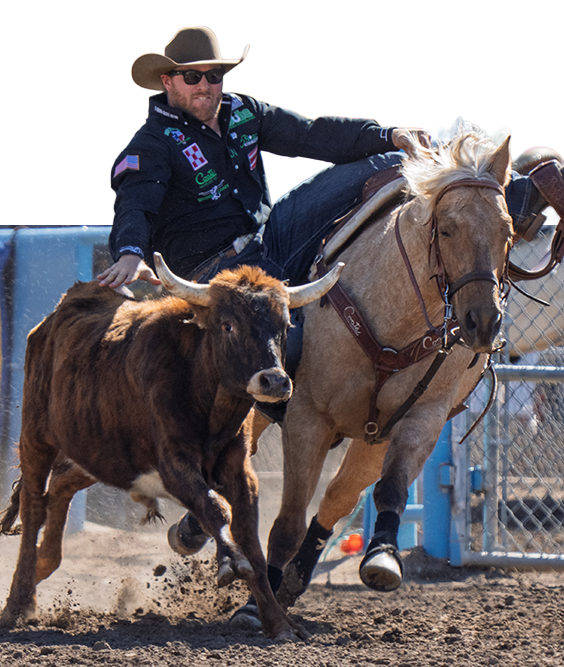
He slides from his running horse onto the steer, takes hold of the horns, plants his feet, and uses technique, leverage, strength, and the steer’s own momentum to bring the animal to the ground.
The clock stops when the steer is legally on its side with all four feet pointing in the same direction. At the Tucson Rodeo, the entire thing can happen in less time than it took you to read this sentence.
How is Steer Wrestling Scored?
Unlike roughstock events, steer wrestling isn't judged on points, but on time.
Every Second Counts
Steer wrestlers compete against the clock—and against a different drawn steer each time—across the rodeo’s go-rounds. Times from those runs are combined into an aggregate, also commonly called the average, and the cowboy with the fastest combined time across the required number of steers wins the Tucson Rodeo championship.
A run that isn’t completed according to the rules can result in a no-time—and when multiple clean runs are needed to contend for the aggregate, one no-time can end a cowboy’s shot at the championship.
Tucson Rodeo Arena Records
The best Tucson has seen when it comes to Steer Wrestling.
Fastest Single Run – 3.8 Seconds
2002- Lynn Nieveen, Crete, Nebraska
2002-Brian Bauerle, Kyle, Texas
2002- Cash Myers, Athens, Texas
2011- Travis Carine, Stanfield, Oregon
2017- Curtis Cassidy Donalda, Alberta
Fastest Total Time Three Head: 13.6 seconds
2011- Josh Peck, Pueblo, Colorado
2013- Casey McMillen, Redmond, Oregon
Fastest Total Time Two Head: 8.8 Seconds
2011- Johnny Asher, Speedwell, Tennessee
Come See the Big Man’s Sport Live
You can read about a few seconds of steer wrestling…or you can see it live.
Buy Your Tickets Today
Steer Wrestling FAQs
Everything you need to know about the big man's event.
What is steer wrestling?
Steer wrestling, also known as bulldogging, is a timed rodeo event in which a cowboy races alongside a running steer on horseback, leaves his horse, catches the steer by the horns, and uses leverage and technique to bring it to the ground.
Why is steer wrestling called bulldogging?
Bulldogging is the traditional rodeo term for steer wrestling, and a steer wrestler is commonly called a bulldogger.
What does the hazer do?
The hazer rides alongside the steer opposite the bulldogger, helping keep the animal running straight and in position for the steer wrestler to make a clean catch.
Do steer wrestlers haze for each other?
Yes. Fellow competitors commonly haze for one another. Although they’re competing against each other, steer wrestlers depend on the skill and experience of other cowboys to help them put together their best runs.
How is steer wrestling scored?
It isn’t scored by judges. Steer wrestling is a timed event, so the fastest clean run wins. Penalties can be added for rule violations, and an incomplete or illegal run can result in a no-time.
What is the barrier in steer wrestling?
The barrier ensures the steer receives its required head start. If the cowboy leaves his box too early and breaks the barrier, a 10-second penalty is added to his time.
Are steers randomly drawn in steer wrestling?
Steers are drawn for contestants, adding another variable to the competition. Cowboys must adjust their approach to the animal they receive and the run that develops once the chute opens.
What does "on three head" mean?
“Three head” means the cowboy competed on three steers. An aggregate time such as 18.4 on three head represents his combined time across those three runs.
What is a go-round in rodeo?
A go-round is one round of competition. Depending on the rodeo’s format and number of entries, contestants may compete in multiple go-rounds, with individual round results and combined aggregate times determining payouts and championships.