Bareback Riding
The Rodeo
Sponsored By

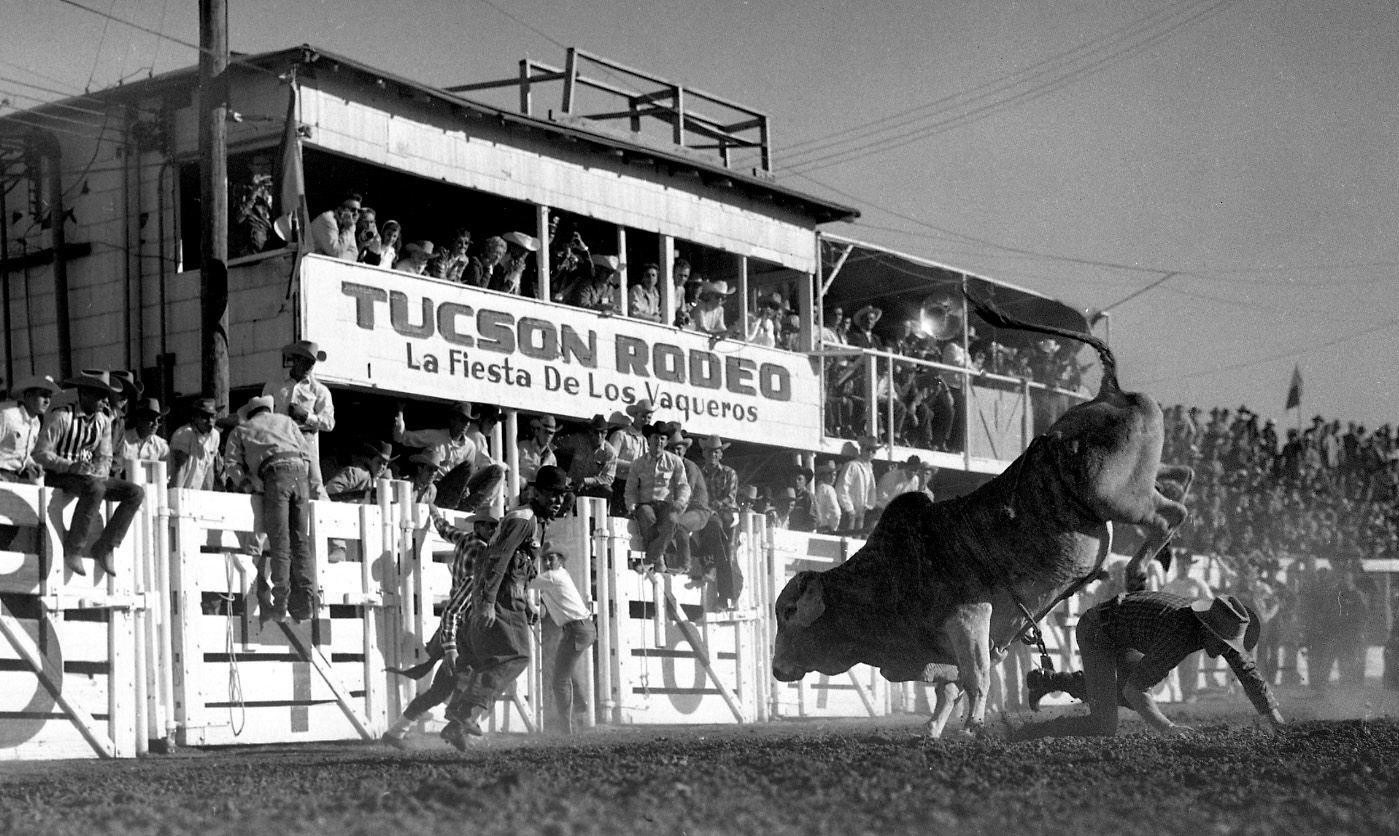
The Ultimate Test of Grit
No saddle, no reins, and absolutely no second chances.
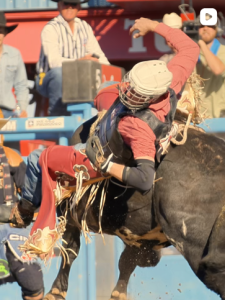
Bareback riding is one of rodeo's roughstock events, and one of its most physically demanding. The moment the chute gate swings open, a powerful bucking horse explodes into the arena while the cowboy attempts to match every jump, kick, and turn.
His only connection to the horse is a specially designed riggin’ held with one hand. His other hand can't touch the horse, his equipment, or even his own body.
And he has to do it for eight seconds.
But simply staying aboard isn't enough. Bareback riding is a judged event, which means the cowboy has to do much more than just survive the ride.
How is Bareback Riding Scored?
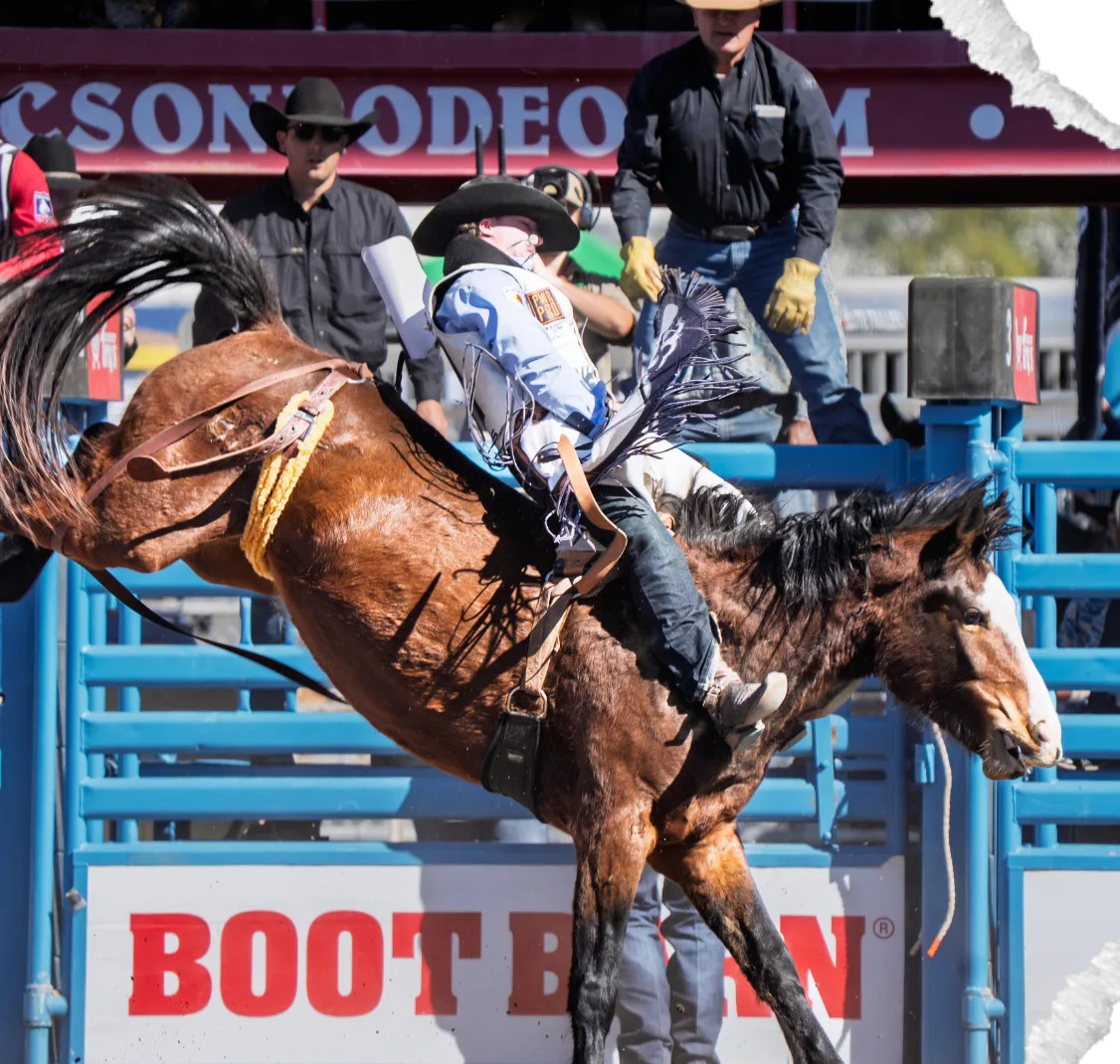
A qualified ride can earn up to 100 points, with the score divided equally between the two athletes.
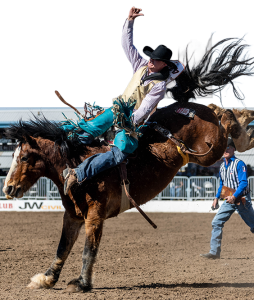
The Cowboy
Judges consider the rider’s control, timing, technique, spur action, and how well he responds to the difficulty of the horse beneath him. He can earn up to 50 points for his ride.
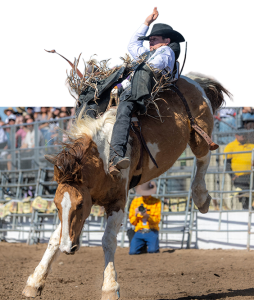
The Horse
The animal athlete is judged on the power and difficulty of its performance, including its kick, jumps, changes in direction, rhythm, and overall athleticism. The animal athlete can also earn up to 50 points for his ride.
100 points is the theoretical max. Anything over 90 is a ride people talk about for years.
Bred to Buck
The horses competing in bareback riding aren't ordinary saddle horses that suddenly decide they don't want a rider.
Modern bucking horses are elite animal athletes, often selectively bred for generations for their natural ability and instinct to buck. Professional stock contractors raise and care for these horses, and the very best can build reputations and careers every bit as impressive as the cowboys who ride them.
In fact, drawing a great bucking horse is exactly what a cowboy hopes for. Top competitors know the standout animal athletes by name, follow their performances, and know when they've drawn a horse capable of helping them put up a big score.
That's because half of the available points come from the horse. The more powerful, athletic, and challenging the bucking performance, the greater the opportunity for an elite cowboy to turn a great draw into a championship-caliber ride.
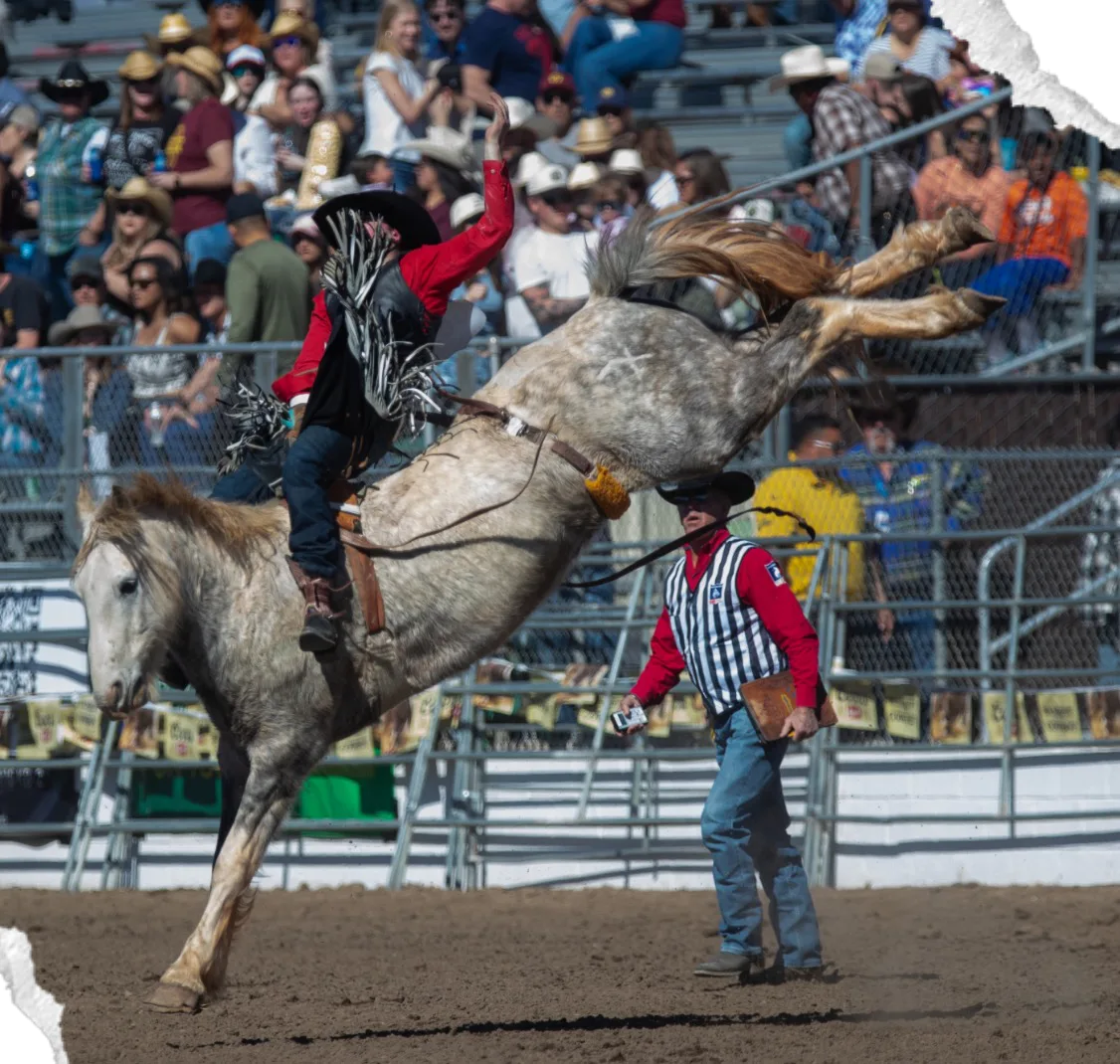
Tucson Rodeo Arena Records
The best Tucson has seen when it comes to Bareback Riding.
Highest Scored ride 93 points
2018 – Devan Reilly Sheridan, Wyoming Killer Bee, Beutler & Son
Highest total score Two Head 179.5 points
2022 – Jess Pope, Waverly, Kansas, Netrenas Tic tac
See Bareback Riding Live
You can read about eight seconds of bareback riding…or you can see it live.
Buy Your Tickets Today
Bareback Riding FAQs
Everything you need to know about rodeo's ultimate test of grit.
How long does a bareback rider have to stay on?
A qualified bareback ride lasts eight seconds. The clock begins when the horse's shoulder or hip breaks the plane of the chute gate.
What does a bareback rider hold onto?
Instead of a saddle, bareback riders use a riggin’, a handhold made of leather and rawhide that is secured around the horse. The cowboy grips it with only one hand.
What is the mark-out rule?
When the horse makes its first jump out of the chute, the cowboy must have both heels above the point of the horse's shoulders. Failing to properly mark the horse out can result in disqualification.
Why do bareback riders move their feet?
That distinctive spur motion is part of the skill of bareback riding. Riders move their feet in rhythm with the horse's bucking motion, and judges consider control, timing, technique, and spur action when determining the rider's score.
How is bareback riding scored?
Bareback riding is scored out of 100 points. Half of the potential score comes from the cowboy's performance and half from the bucking horse's performance.
Are bareback horses trained to buck?
Bucking horses have a natural inclination and athletic ability to buck, and many of today's top horses come from bloodlines selectively bred for that ability. They are raised and cared for as animal athletes by professional stock contractors.
What's the difference between bareback and saddle bronc riding?
Both are eight-second roughstock events, but the equipment and riding techniques are very different. Bareback riders use a one-handed riggin’ and no saddle, while saddle bronc riders compete in a specialized saddle and hold a rein attached to the horse's halter.
Want to see the difference? Learn More About Saddle Bronc Riding