Team Roping
The Rodeo
Team Roping
2 Cowboys + 2 Horses + 1 Clock
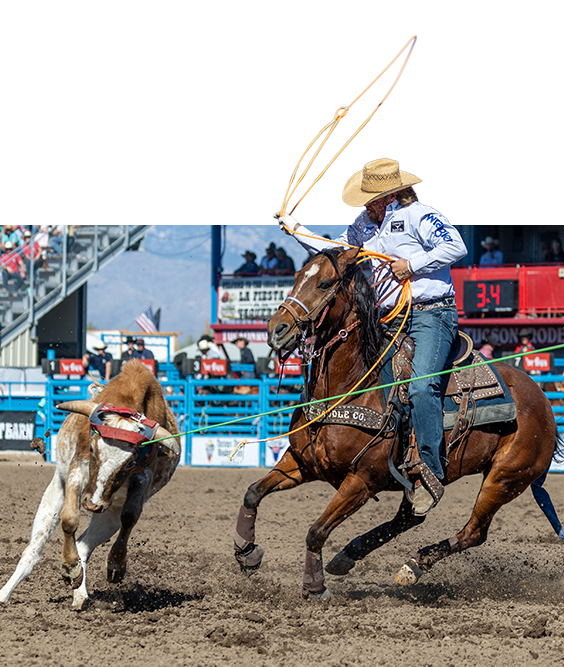
Team roping is the only rodeo event where two cowboys compete together, relying on timing, communication, horsemanship, and precision to beat the clock.
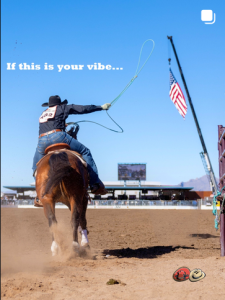
In just a matter of seconds, the header and heeler must work in perfect sequence to rope a running steer. The header makes the first catch and turns the steer. The heeler follows, delivering a second loop around the hind feet.
It happens fast—the Tucson Rodeo arena record is just 4.6 seconds!
Speed matters, but coordination makes or breaks the run. The best teams seem to move as one, each cowboy anticipating what his partner, and the steer, will do next.
How Team Roping Works
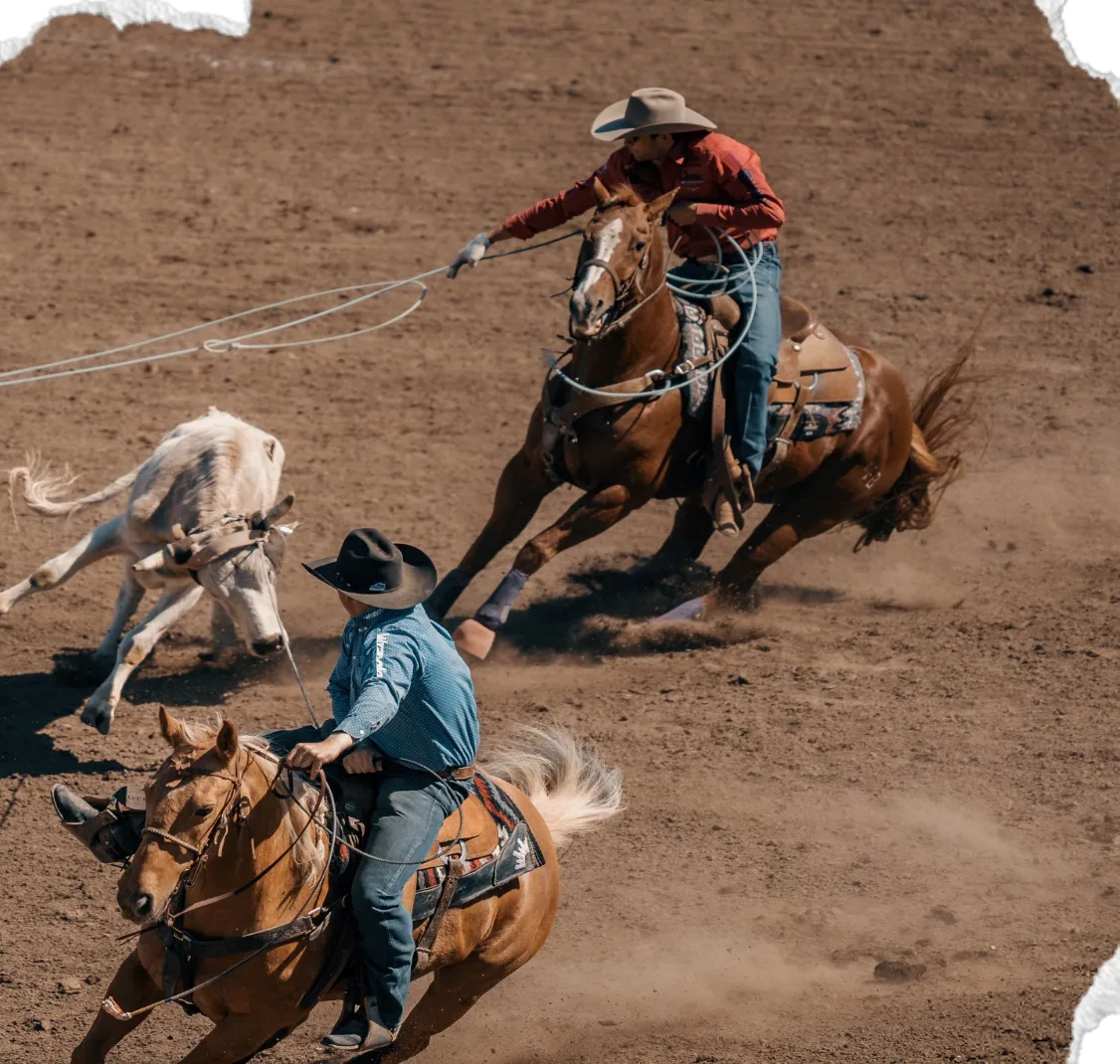
The header and heeler begin on horseback in separate roping boxes on either side of the chute. The steer gets a designated head start, but once the barrier releases, both cowboys give chase.
The header ropes first. Under PRCA rules, there are three legal head catches: around both horns, around one horn and the head, or around the neck. Once the catch is made, the header turns the steer to the left, setting up the second half of the run. The heeler positions his horse behind the steer and throws his loop, attempting to catch both hind feet.
The clock stops when the steer is roped, both horses are facing the steer with their ropes tight, and the run is complete according to the rules. When it’s done well, the entire sequence can take less than five seconds.
A great team roping run requires a coordinated effort by four athletes: two cowboys, and two horses.
The header’s horse must accelerate after the steer, help position the cowboy for the catch, and then handle the steer through the turn.The header has to leave cleanly, position his horse, deliver a legal catch, and control the turn. That turn determines the opportunity the heeler gets behind him.
The heeler’s horse must track the steer, maintain the right position, and help create the precise opportunity the heeler needs to deliver his loop. The heeler has to read what’s developing, position his own horse, time his delivery, and catch both hind feet—all without disrupting the rhythm of the run.
A fraction of a second gained by one partner can disappear just as quickly if the other gets out of position.
How is Team Roping Scored?
Team roping isn't judged on points, but on time.
Partners Against the Clock
Competition begins in the preliminary go-rounds, where each team competes against the clock with a drawn steer. The top qualifying teams advance to Championship Sunday, where they’ll draw again and have another opportunity to put together a winning run.
Times from the required runs are combined to determine the team’s aggregate, also commonly called the average.
In an event this fast, penalties are costly. Breaking the barrier before the steer receives its required head start adds 10 seconds. If the heeler catches only one hind foot, 5 seconds are added to the team’s time. An illegal head catch or a run that isn’t completed according to the rules results in a no-time.
Tucson Rodeo Arena Records
The best Tucson has seen when it comes to Team Roping.
Fastest Single Run – 4.6 seconds
2019 – Jake Orman, Prairie, MS
Walt Woodward, Stephenville, TX
Fastest Total Time Three Head – 17.1 seconds
2003- Travis Tryan, Billings, MT
Matt Zancanella, Aurora, SD
Fastest Total Time Two Head – 11.5 seconds
2003 – Travis Tryan, Billings, MT
Matt Zancanella, Aurora, SD
See Team Roping Live
You can read about a few seconds of team roping…or you can see it live.
Buy Your Tickets Today
Team Roping FAQs.
Answers to your questions about rodeo's only two-cowboy event.
What is team roping?
Team roping is a timed rodeo event featuring two mounted competitors: a header and a heeler. The header ropes and turns the steer before the heeler ropes its hind feet. The fastest clean time wins.
What is the difference between a header and a heeler?
The header makes the first catch and turns the steer. The heeler follows and attempts to rope both hind feet.
What catches are legal for the header in team roping?
Under PRCA rules, the header can make three legal catches: around both horns, around one horn and the head, or around the neck.
What happens if the heeler catches only one leg?
If the heeler catches only one hind foot, 5 seconds are added to the team’s time.
What happens if the team breaks the barrier?
The steer is entitled to a head start. If the header leaves the box too early and breaks the barrier, a 10-second penalty is added to the team’s time.
How does the clock stop in team roping?
The run is complete when both ropers have made their catches, there is no slack in their ropes, and their horses are facing the steer in accordance with the event rules.
Are steers drawn in team roping?
Yes. Teams compete on drawn cattle, adding another variable to each run. The header, heeler, and their horses have to respond to the steer they receive and the run that develops in front of them.
Why are the horses important in team roping?
Both horses perform specialized roles. The header’s horse helps position and turn the steer, while the heeler’s horse tracks the steer and helps position the heeler for the second catch. Elite roping horses are highly trained animal athletes and an essential part of a successful team.
What is a good team roping time?
At the professional level, a clean run can happen in only a few seconds. The Tucson Rodeo arena record for a single team roping run is 4.6 seconds.